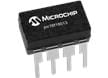

PIC18F4520T-E/ML

Microchip Technology
579-PIC18F4520T-E/ML
PIC18F4520T-E/ML

Fabr.:

Descripción:
Microcontroladores (MCU) de 8 bits 32KB 1536 RAM 36I/O

Modelo ECAD:
Descargue el Cargador de bibliotecas gratuito para convertir este archivo para su herramienta ECAD. Obtenga más información del modelo ECAD.

Disponibilidad

Existencias:
No en almacén
Plazo de producción de fábrica:
6 Semanas Tiempo estimado para la producción en fábrica.
Mínimo: 1600   Múltiples: 1600
Precio unitario:
-,-- €
Precio total:
-,-- €
Tarifa estimada:
Este producto se envía de forma GRATUITA

Precio (EUR)

Cant. Precio unitario
Precio total
Bobina completo(s) (realice el pedido en múltiplos de 1600)
5,68 € 9.088,00 €

Atributo del producto Valor del atributo Seleccionar atributo
Microchip
Categoría de producto: Microcontroladores (MCU) de 8 bits
RoHS:  
PIC18
QFN-44
SMD/SMT
8 bit
PIC18(L)Fxx20
Reel
Marca: Microchip Technology
Serie del procesador: PIC18
Producto: MCUs
Tipo de producto: 8-bit Microcontrollers - MCU
Cantidad del paquete de fábrica: 1600
Subcategoría: Microcontrollers - MCU
Nombre comercial: PIC
Productos encontrados:
Para mostrar productos similares, seleccione al menos una casilla
Seleccione al menos una casilla para mostrar productos similares dentro de esta categoría.
Atributos seleccionados: 0

Esta funcionalidad requiere que JavaScript esté habilitado.

TARIC:
8542319000
CNHTS:
8542319090
CAHTS:
8542310000
USHTS:
8542310015
JPHTS:
8542310324
MXHTS:
8542310399
ECCN:
3A991.a.2

Functional Safety Solutions

Microchip Technology Functional Safety Solutions offer robustness, reliability, and safety to end-products. In some application segments, these requirements are formalized and mandatory, while in others, they are implemented to differentiate the product and take the step from a good product to an excellent product. The standards for functional safety depend on the market that is targeted. Many standards support multiple levels of rigorousness, which are applied depending on the likelihood and severity of the hazard. The methods of addressing hazards range from detecting single failures and putting the system into a safe state to full redundancy, where failures should not only be detected but also corrected without any interruption or degradation of service.