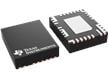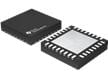

TPS259401AQRVCRQ1

Texas Instruments
595-PS259401AQRVCRQ1
TPS259401AQRVCRQ1

Fabr.:

Descripción:
Controladores de voltaje de cambio en caliente 2.7-V to 18-V 42moh m 0.6-5.3A automoti

Modelo ECAD:
Descargue el Cargador de bibliotecas gratuito para convertir este archivo para su herramienta ECAD. Obtenga más información del modelo ECAD.

Atributo del producto Valor del atributo Seleccionar atributo
Texas Instruments
Categoría de producto: Controladores de voltaje de cambio en caliente
RoHS:  
Controllers & Switches
600 mA to 5.3 A
18 V
2.7 V
210 uA
- 40 C
+ 125 C
SMD/SMT
WQFN-20
Reel
Cut Tape
MouseReel
Yes
Marca: Texas Instruments
Kit de desarrollo: TPS25940EVM-635
Sensibles a la humedad: Yes
Tipo de producto: Hot Swap Voltage Controllers
Serie: TPS25940
Cantidad del paquete de fábrica: 3000
Subcategoría: PMIC - Power Management ICs
Productos encontrados:
Para mostrar productos similares, seleccione al menos una casilla
Seleccione al menos una casilla para mostrar productos similares dentro de esta categoría.
Atributos seleccionados: 0

Esta funcionalidad requiere que JavaScript esté habilitado.

Códigos de cumplimiento
CNHTS:
8542399000
USHTS:
8542390090
ECCN:
EAR99
Clasificaciones de origen
País de origen:
Filipinas
País de origen del ensamblaje:
No disponible
País de difusión:
No disponible
El país puede cambiar en el momento del envío.

LM5060 High-Side Protection Controllers

Texas Instruments LM5060 High-Side Protection Controllers with Low Quiescent Current offers intelligent control of a high-side N-channel MOSFET during normal on/off transitions and fault conditions. The constant rise time of the output voltage results from the inrush current control. Both an Input UVLO (with hysteresis) and a programmable input OVP are provided, with an enable input offering a remote on or off control. The initial start-up VGS fault detection delay time, the transition VDS fault detection delay time, and the continuous over-current VDS fault detection delay time is programmed from a single capacitor. The MOSFET is latched off until either the enable input, or the UVLO input is toggled low and then high when a detected fault condition persists longer than the allowed fault delay time.

TPS25940/TPS25940-Q1 eFuse Power Switch

Texas Instruments TPS25940/TPS25940-Q1 eFuse Power Switch is a compact, feature-rich power management device with a full suite of protection functions. These functions include a low-power DevSleep™ mode that supports compliance with the SATA™ Device Sleep standard. The wide operating range allows control of many popular DC bus voltages. Integrated back-to-back FETs provide bidirectional current control. These FETs make it well suited for systems with load-side hold-up energy that must not drain back to a failed supply bus. Load, source, and device protection are provided with programmable features, including over current, dVo/dt ramp, and over-voltage, under-voltage thresholds. The device offers PGOOD, FLT, and precise current monitor output for system status monitoring and downstream load control. Precise programmable under-voltage, over-voltage thresholds, and the low IQ DevSleep mode simplify SSD power management design. The Texas Instruments TPS25940-Q1 devices are AEC-Q100 qualified for automotive applications.

En existencias: 177

Existencias:
177
Puede enviarse inmediatamente
Pedido:
3.000
Fecha prevista: 21/01/2027
Plazo de producción de fábrica:
26
Semanas Tiempo estimado para la producción en fábrica para cantidades superiores a las mostradas.
Mínimo: 1   Múltiples: 1
Precio unitario:
-,-- €
Precio total:
-,-- €
Tarifa estimada:
Empaquetado:
Bobina completo(s) (realice el pedido en múltiplos de 3000)

Precio (EUR)

Cant. Precio unitario
Precio total
Cinta / MouseReel™ †
2,49 € 2,49 €
1,87 € 18,70 €
1,71 € 42,75 €
1,56 € 156,00 €
1,55 € 775,00 €
1,51 € 1.510,00 €
Bobina completo(s) (realice el pedido en múltiplos de 3000)
1,28 € 3.840,00 €
1,27 € 7.620,00 €
† La tarifa de 5,00 € de MouseReel™ se añadirá y calculará en el carro de compra. Los pedidos de MouseReel™ no se pueden cancelar ni devolver. ↩