
4409

Adafruit
485-4409
4409

Fabr.:

Descripción:
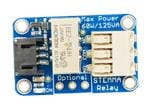
Accesorios Adafruit Adafruit STEMMA Non-Latching Mini Relay - JST PH 2mm

Modelo ECAD:
Descargue el Cargador de bibliotecas gratuito para convertir este archivo para su herramienta ECAD. Obtenga más información del modelo ECAD.

En existencias: 43

Existencias:
43 Puede enviarse inmediatamente
Plazo de producción de fábrica:
1 semana Tiempo estimado para la producción en fábrica para cantidades superiores a las mostradas.
Mínimo: 1   Múltiples: 1
Precio unitario:
-,-- €
Precio total:
-,-- €
Tarifa estimada:

Precio (EUR)

Cant. Precio unitario
Precio total
5,98 € 5,98 €

Atributo del producto Valor del atributo Seleccionar atributo
Adafruit
Categoría de producto: Accesorios Adafruit
RoHS:  
Accessories
STEMMA Non-Latching Mini Relay
Marca: Adafruit
Descripción/Función: STEMMA Non-Latching Mini Relay
Tipo de producto: Accessories
Serie: STEMMA
Cantidad del paquete de fábrica: 1
Subcategoría: Supplies
Productos encontrados:
Para mostrar productos similares, seleccione al menos una casilla
Seleccione al menos una casilla para mostrar productos similares dentro de esta categoría.
Atributos seleccionados: 0

USHTS:
8536410020
ECCN:
EAR99

STEMMA Non-Latching Mini Relay Breakout Board

Adafruit STEMMA Non-Latching Mini Relay Breakout Board gives the user the power to control and control over power. The board allows the user to turn on and off lamps, fans, solenoids, and other small appliances that run on up to 250VAC or DC power using any microcontroller or microcomputer. There is no worrying about flyback diodes, level shifting, or pin protection, as the STEMMA board takes care of that automatically. This board can be used with any 3V or 5V microcontroller/microcomputer. To use it with a breadboard, Raspberry Pi or Arduino, pair it with a JST 3-pin to breadboard cable. If the user wants to use it with a Circuit Playground or micro:bit, there is a cable with alligator clips available. Each STEMMA board comes with a fully assembled and tested PCB but no cable. No soldering is required to use it. There's an optional second switch on the side of the PCB. If the user gets a 3-pin terminal block you can solder that in place, but it is optional.