
DEV-14459

SparkFun
474-DEV-14459
DEV-14459

Fabr.:

Descripción:
Hats / placas complementarias de Raspberry Pi SparkFun Qwiic HAT for Raspberry Pi

En existencias: 78

Existencias:
78 Puede enviarse inmediatamente
Plazo de producción de fábrica:
7 Semanas Tiempo estimado para la producción en fábrica para cantidades superiores a las mostradas.
Mínimo: 1   Múltiples: 1
Precio unitario:
-,-- €
Precio total:
-,-- €
Tarifa estimada:

Precio (EUR)

Cant. Precio unitario
Precio total
5,67 € 5,67 €

Atributo del producto Valor del atributo Seleccionar atributo
SparkFun Electronics
Categoría de producto: Hats / placas complementarias de Raspberry Pi
RoHS:  
Connectors
Qwiic HAT
Qwiic HAT
Raspberry Pi
Marca: SparkFun
Tipo de producto: Accessories
Cantidad del paquete de fábrica: 1
Subcategoría: Computing
Peso unitario: 11,512 g
Productos encontrados:
Para mostrar productos similares, seleccione al menos una casilla
Seleccione al menos una casilla para mostrar productos similares dentro de esta categoría.
Atributos seleccionados: 0

TARIC:
8534001900
CAHTS:
8473302000
USHTS:
8473301180
MXHTS:
8473300401
ECCN:
EAR99

Qwiic Shields, Adapters, & Relays

SparkFun Qwiic Shields, Adapters, and Relays are Easy-to-use boards that integrate the Qwiic Connect System with other I2C-enabled ecosystems. Qwiic Shields are offered for the Arduino and Particle Photon, and the Qwiic HAT for Raspberry Pi adds four Qwiic connect ports to any Raspberry Pi that utilizes the standard 2x20 GPIO header. The Qwiic Adapter allows users to make virtually any I2C board into a Qwiic-enabled board.

Qwiic HAT for Raspberry Pi (DEV-14459)

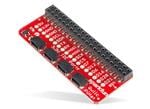
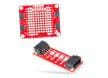
SparkFun Qwiic HAT for Raspberry Pi (DEV-14459) is the quickest and easiest way to utilize the Qwiic ecosystem while using Raspberry Pi. The Qwiic HAT connects the I2C bus (GND, 3.3V, SDA, and SCL) on Raspberry Pi to an array of Qwiic connectors on the HAT. This Qwiic system can stack many sensors to create a tower of sensing power with different addresses in chain boards. The Qwiic HAT connectors consist of four connect ports, all on the same I2C bus, and are compatible with any Raspberry Pi that utilizes a standard 2 x 20 General-purpose Input/Output (GPIO) header.