
ADM00421

Microchip Technology
579-ADM00421
ADM00421

Fabr.:

Descripción:
Herramientas de desarrollo de interfaz MCP2210 Eval Kit

En existencias: 7

Existencias:
7 Puede enviarse inmediatamente
Plazo de producción de fábrica:
1 semana Tiempo estimado para la producción en fábrica para cantidades superiores a las mostradas.
Mínimo: 1   Múltiples: 1
Precio unitario:
-,-- €
Precio total:
-,-- €
Tarifa estimada:

Precio (EUR)

Cant. Precio unitario
Precio total
44,46 € 44,46 €

Atributo del producto Valor del atributo Seleccionar atributo
Microchip
Categoría de producto: Herramientas de desarrollo de interfaz
RoHS:  
Evaluation Kits
USB to SPI
MCP2210
Marca: Microchip Technology
Descripción/Función: USB to SPI
Para uso con: ADM00419, ADM00420
Tipo de interfaz: SPI, USB
Voltaje operativo de suministro: 3.3 V, 5 V
Tipo de producto: Interface Development Tools
Cantidad del paquete de fábrica: 1
Subcategoría: Development Tools
Peso unitario: 226,800 g
Productos encontrados:
Para mostrar productos similares, seleccione al menos una casilla
Seleccione al menos una casilla para mostrar productos similares dentro de esta categoría.
Atributos seleccionados: 0

TARIC:
8517620000
CNHTS:
8543709990
CAHTS:
8542330000
USHTS:
8542330001
KRHTS:
8532331000
MXHTS:
8542330201
ECCN:
EAR99

Smart (Effortless Embedded Control Solutions)

Microchip Technology Effortless Embedded Control Solutions allow developers to effortlessly meet the ever-changing requirements of modern electronics with a portfolio of scalable 8-bit, 16-bit, and 32-bit microcontrollers, digital signal controllers, and microprocessors. Flexible peripherals and functions make creating differentiated applications that set you apart from your competition easy. Intuitive design environments and visual configuration tools provide a straightforward getting-started experience while proven reference designs and professionally tested software libraries lower your design risk.

MCP2210 USB-to-SPI Protocol Converter

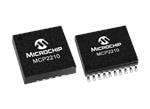
Microchip MCP2210 USB-to-SPI Protocol Converter is the simplest, smallest, and most cost-effective device for adding USB-certified connectivity to SPI-based systems. This space-constrained Microchip USB-to-SPI protocol converter features nine flexible GPIO pins that can be configured as standard digital I/O pins or in alternate configurations. The MCP2210 converter utilizes the USB HID class supported by Windows®, Linux, and Mac OS® operating systems. This Microchip converter is a 100% plug-and-play solution, making it even simpler to add USB to existing designs for data collection, transfer, and analysis as well as many other USB functions.

MCP2210 Evaluation Kit

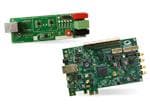
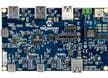
Microchip MCP2210 Evaluation Kit is a development and evaluation platform for the MCP2210 device. The MCP2210 Motherboard is designed to work together with the MCP2210 Breakout Board. The motherboard provides the test points needed for measurements, and it also contains the following SPI slave chips: MCP23S08 - 8-bit I/O expander; MCP3204 - 4 channel, 12-bit ADC; 25LC02 - 2kB EEPROM; TC77 - temperature sensor.

Wireless Development Kits

Incorporate wireless connectivity and security into designs with Microchip's wireless development kits. Choose from a wide range of development tools to evaluate designs that support various wireless technologies, multiple devices, and architectures. Microchip development tools work together to take full advantage of the MPLAB X ecosystem, including MPLAB X IDE, MPLAB XC C Compilers, and much more.

Application Specific Development Tools

Microchip Technology Application-Specific Development Tools make it possible to enhance designs and rapidly design, build, and deploy projects. These tools' applications include Ethernet, eXtreme Low Power, Graphics and LCD, Motor Control and Power Conversion, USB, and Touch Sensing.

Engineering Development Tools

Microchip Technology Engineering Development Tools offer a range of boards to support silicon products, from simple boards to high-end debug tools. These tools can be used in various applications and specific vertical markets like metering, motor control, and power supplies. These boards include analog and digital IC, communication, development software, embedded, optoelectronic, power management, RF/wireless, and sensor development.