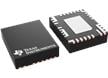

TPS26632RGER

Texas Instruments
595-TPS26632RGER
TPS26632RGER

Fabr.:

Descripción:
Controladores de voltaje de cambio en caliente 4.5-V to 60-V 31moh m 0.6-6A eFuse with A 595-TPS26632RGET

Modelo ECAD:
Descargue el Cargador de bibliotecas gratuito para convertir este archivo para su herramienta ECAD. Obtenga más información del modelo ECAD.

En existencias: 2.763

Existencias:
2.763 Puede enviarse inmediatamente
Plazo de producción de fábrica:
6 Semanas Tiempo estimado para la producción en fábrica para cantidades superiores a las mostradas.
Plazo de entrega largo indicado para este producto.
Mínimo: 1   Múltiples: 1
Precio unitario:
-,-- €
Precio total:
-,-- €
Tarifa estimada:
Empaquetado:
Bobina completo(s) (realice el pedido en múltiplos de 3000)

Precio (EUR)

Cant. Precio unitario
Precio total
Cinta / MouseReel™
3,60 € 3,60 €
3,13 € 31,30 €
2,99 € 2.990,00 €
Bobina completo(s) (realice el pedido en múltiplos de 3000)
1,87 € 5.610,00 €
† La tarifa de 5,00 € de MouseReel™ se añadirá y calculará en el carro de compra. Los pedidos de MouseReel™ no se pueden cancelar ni devolver.

Empaquetado alternativo

Fabr. N.º Ref.:
Embalaje:
Reel, Cut Tape, MouseReel
Disponibilidad:
En existencias
Precio:
3,80 €
Min:
1

Producto similar

Texas Instruments TPS26632RGET
Texas Instruments
Controladores de voltaje de cambio en caliente 4.5-V to 60-V 31moh m 0.6-6A eFuse with A 595-TPS26632RGER

Atributo del producto Valor del atributo Seleccionar atributo
Texas Instruments
Categoría de producto: Controladores de voltaje de cambio en caliente
RoHS:  
PCI Power Management
600 mA to 6 A
60 V
4.5 V
1 Channel
1.38 mA
- 40 C
+ 125 C
SMD/SMT
VQFN-24
Reel
Cut Tape
MouseReel
Yes
Marca: Texas Instruments
Tensión de entrada / suministro (máx.): 60 V
Tensión de entrada / suministro (mín.): 4.5 V
Tipo de producto: Hot Swap Voltage Controllers
Serie: TPS2663
Cantidad del paquete de fábrica: 3000
Subcategoría: PMIC - Power Management ICs
Productos encontrados:
Para mostrar productos similares, seleccione al menos una casilla
Seleccione al menos una casilla para mostrar productos similares dentro de esta categoría.
Atributos seleccionados: 0

Esta funcionalidad requiere que JavaScript esté habilitado.

Códigos de cumplimiento
CNHTS:
8542399000
USHTS:
8542390070
MXHTS:
8542399999
ECCN:
EAR99
Clasificaciones de origen
País de origen:
China
País de origen del ensamblaje:
China
País de difusión:
Estados Unidos
El país puede cambiar en el momento del envío.

TPS2663x Surge Protection Industrial eFuses

Texas Instruments TPS2663x Surge Protection Industrial eFuses are ease-of-use and positive 60V and 6A eFuse with a 31mΩ integrated FET. These eFuses feature a B-FET driver to control an external N-channel FET in the system designs, requiring protection from input reverse polarity faults. TPS2663x eFuses provide fault and a precise current monitor output enabling system status monitoring and downstream load control. PGOOD can be used to enable and disable control of the downstream DC-DC converters. Configuring the TPS2663x using the MODE pin allows flexibility between the two current-limiting fault responses (latch-off and auto-retry). These eFuses are used in I/O modules, sensor hubs, electronic circuit breakers, and factory automation.

LM5060 High-Side Protection Controllers

Texas Instruments LM5060 High-Side Protection Controllers with Low Quiescent Current offers intelligent control of a high-side N-channel MOSFET during normal on/off transitions and fault conditions. The constant rise time of the output voltage results from the inrush current control. Both an Input UVLO (with hysteresis) and a programmable input OVP are provided, with an enable input offering a remote on or off control. The initial start-up VGS fault detection delay time, the transition VDS fault detection delay time, and the continuous over-current VDS fault detection delay time is programmed from a single capacitor. The MOSFET is latched off until either the enable input, or the UVLO input is toggled low and then high when a detected fault condition persists longer than the allowed fault delay time.