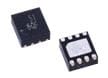

DIO5183CD14

DIOO Microcircuits
453-DIO5183CD14
DIO5183CD14

Fabr.:

Descripción:
CI de controladores de iluminación LED 1.5A Flash LED Driver

Ciclo de vida:
Obsoleto
Modelo ECAD:
Descargue el Cargador de bibliotecas gratuito para convertir este archivo para su herramienta ECAD. Obtenga más información del modelo ECAD.
Actualmente Mouser no vende este producto en su región.

Disponibilidad

Existencias:

Atributo del producto Valor del atributo Seleccionar atributo
DIOO
Categoría de producto: CI de controladores de iluminación LED
Restricciones de envío:
 Actualmente Mouser no vende este producto en su región.
RoHS:  
2 Output
1.5 A
DFN-14
5.5 V
2.7 V
2 MHz
DIO5183
Reel
Cut Tape
MouseReel
Marca: DIOO Microcircuits
País de ensamblaje: Not Available
País de difusión: Not Available
País de origen: Not Available
Voltaje de entrada: 2.7 V to 5.5 V
Sensibles a la humedad: Yes
Estilo de montaje: SMD/SMT
Número de canales: 2 Channel
Producto: LED Drivers
Tipo de producto: LED Lighting Drivers
Cantidad del paquete de fábrica: 3000
Subcategoría: Driver ICs
Tipo: Flash LED Driver
Productos encontrados:
Para mostrar productos similares, seleccione al menos una casilla
Seleccione al menos una casilla para mostrar productos similares dentro de esta categoría.
Atributos seleccionados: 0

Esta funcionalidad requiere que JavaScript esté habilitado.

TARIC:
8542399000
CNHTS:
8542319090
CAHTS:
8542390000
USHTS:
8542390090
JPHTS:
854239099
MXHTS:
8542399901
ECCN:
EAR99

IS32LT3175N/P Single-Channel Linear LED Drivers

ISSI IS32LT3175N/P Single-Channel Linear LED Drivers come with fade in/out and PWM dimming. The regulators serve as a stand-alone LED driver-configurable from 20mA to 150mA with external resistors, no microcontroller is necessary. A logic level “courtesy light” signal from the PWM pin can be interfaced to precisely drive the LED channel. The IS32LT3175P obtains a positive polarity PWM signal. In addition, the IS32LT3175N obtains a negative polarity PWM signal. The regulator integrates a 63-step fade-in and fades out the algorithm (Gamma correction). This causes the output LED current to increasingly rise up to the full source value after the EN pin is pulsed.